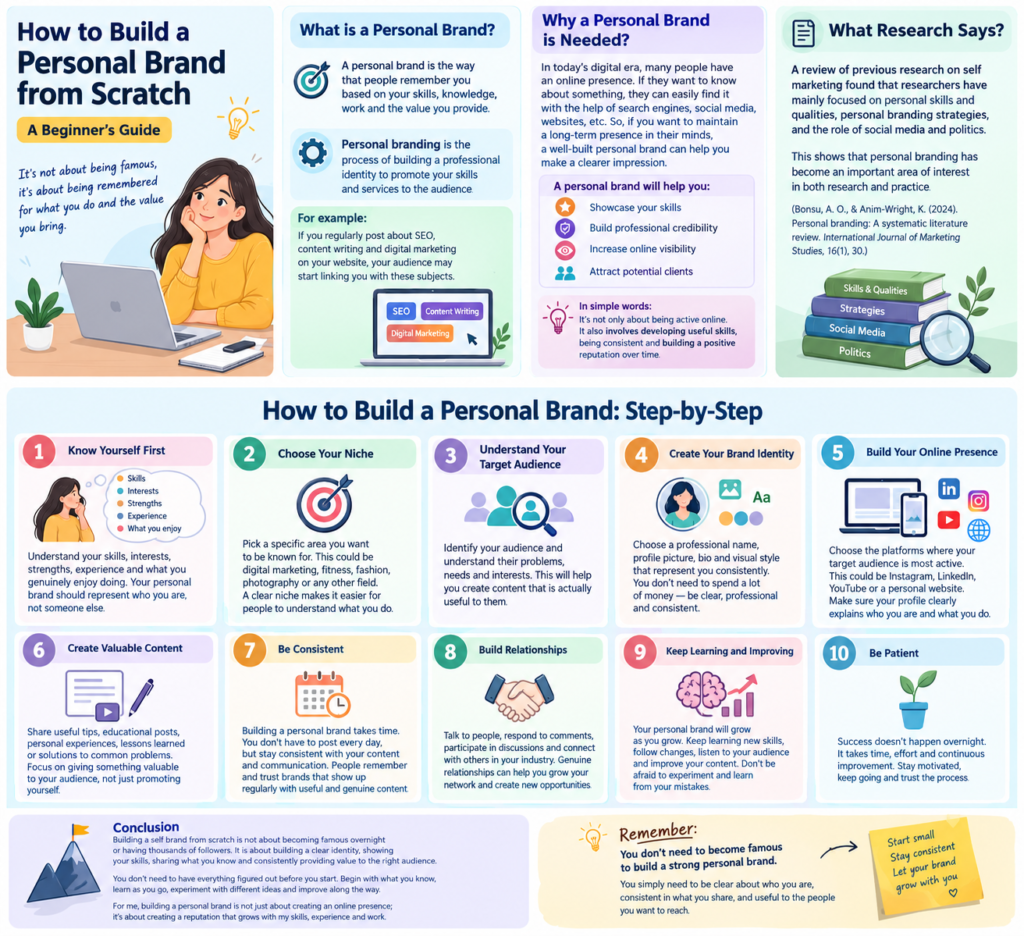
When I first heard about personal branding I used to think that people with large following or years of experience can build a personal brand but as I started learning more about it, I realized that it is about how people recognize you and what they remember you for. Since I am also at the beginning of my journey, I decided to start building my own self marketing professional identity from scratch. I want to learn, experiment, create content and improve along the way.
What is a Personal Brand?
A personal brand is the way that how people remember you based on your skills, knowledge, work and the value you provide.
On the other hand, personal branding is the process of building a professional identity to promote your skills and services to the audience.
For example: Imagine a person regularly post about SEO, Content writing and Digital marketing on his website so after seeing the work continuously the audience may start linking that person with these subjects.
Why a personal brand is needed?
In this digital era, many people have an online presence if they want to know about something so they can easily find it out with the help of search engine, social media, website etc. if you want to maintain a long-term presence in audience mind so a well-built personal brand can help you make a clearer impression.
A personal brand will help you to:
•Showcase your skills
•Build professional credibility
•Increase online visibility
•Attract potential clients
In simple words It’s not only about being active on social media or creating a good online image. It also involves developing useful skills, presenting yourself consistently, and building a positive reputation over time.
A review of previous research on self marketing found that researchers have mainly focused on personal skills and qualities, personal branding strategies, and the role of social media and politics. This shows that personal branding has become an important area of interest in both research and practice (Bonsu, A. O., & Anim-Wright, K. (2024). Personal branding: A systematic literature review. International Journal of Marketing Studies, 16(1), 30.)
How to Build a Personal Brand: Step-by-Step
1. Know Yourself First
The first step in building a personal brand is understanding yourself. Introspect about your skills, interests, strengths, experience, and the things you genuinely enjoy doing. Your personal brand should represent who you are rather than trying to copy someone else.
2. Choose Your Niche
Once you understand your strengths, choose a specific area you want to be known for. This could be digital marketing, fitness, fashion, photography, or any other field. A clear niche makes it easier for people to understand what you do and what they can expect from you.
3. Understand Your Target Audience
A personal brand is not only about you it is also about the people you want to reach. Identify your target audience and understand their problems, needs, and interests. This will help you create content that is actually useful to them.
4. Create Your Brand Identity
Choose a professional name, profile picture, bio, and visual style that represent you consistently. You don’t need to spend a lot of money on branding when you are starting. Focus on being clear, professional, and consistent.
5. Build Your Online Presence
Choose the platforms where your target audience is most active. Depending on your niche, this could be Instagram, LinkedIn, YouTube, or a personal website. Make sure your profile clearly explains who you are, what you do, and how you can help others.
6. Create Valuable Content
Content is one of the best ways to show your knowledge and build credibility. Share useful tips, educational posts, personal experiences, lessons you have learned, or solutions to common problems in your niche. Instead of only promoting yourself, focus on giving something valuable to your audience.
7. Be Consistent
Building a personal brand takes time. You don’t have to post every single day, but you should remain consistent with your content and communication. When people repeatedly see useful and genuine content from you, they are more likely to remember and trust your brand.
8. Build Relationships Personal branding is not just about posting content. Talk to people, respond to comments, participate in discussions, and connect with others in your industry. Building genuine relationships can help you grow your network and create new opportunities.
9. Keep Learning and Improving
Your personal brand will grow as you grow. Keep learning new skills, follow required changes, listen to your audience, and improve your content. Don’t be afraid to experiment and learn from your mistakes.
Remember: You don’t need to become famous to build a strong personal brand. You simply need to be clear about who you are, consistent in what you share, and useful to the people you want to reach.
Conclusion
Building a self brand from scratch is not about becoming famous overnight or having thousands of followers. It is about building a clear identity, showing your skills, sharing what you know, and consistently providing value to the right audience. As I have learned through my own journey, personal branding is a process it takes time, patience, learning, and continuous improvement.
You don’t need to have everything figured out before you start. You can begin with what you know, learn as you go, experiment with different ideas, and improve along the way. The most important thing is to stay genuine and consistent because people remember those who genuinely provide value.
For me, building a personal brand from scratch is not just about creating an online presence; it is about creating a reputation that grows with my skills, experience, and work. And if you are also starting from zero, don’t wait until you feel ready start small, stay consistent, and let your personal brand grow with you.